None of the plants below are native to Nipmuc country but they are all found everywhere and I use them regularly when making, using, and giving away plant medicine.
Plantain

Plantain is #1 on this list because it’s my favorite medicinal plant and its available everywhere. It is NOT native to the Americas, the colonists brought it over from Europe. As someone who works with plants for healing, I’ve come to really appreciate the power of plantain. You can find it all over the place. It’s crazy adaptable and has a natural ability to help with healing.
Red Clover

I’ve always found comfort and strength in this plant. It’s such a tough little plant, growing right here in the soil beneath our feet and spreading its healing goodness all over. No matter how many times it gets mowed down, it comes right back up. When I’m out and about, I collect as many flower heads as I can ( the older I get, the fewer I collect though). Then I dry them quickly so they retain their color.
Red Clover is packed with all sorts of good stuff like glycosides, flavonoids, coumarins, and other compounds that work wonders for our health. From soothing skin issues in kids like eczema and helping with coughs, bronchitis, fever, arthritis, and gout, red clover is really versatile. I use it often in the spring for my allergy cough and I always add this in the winter to my cold and flu tea mixtures.
Mullein

Another of my favorites plants is Mullein. It’s been around since colonization, originally from Europe and Asia, but now you can find it pretty much anywhere. It grows in places that you wouldn’t think a plant could grow including back alleys, sidewalks, and abandoned areas. It’s best to gather its leaves and flowers in late spring/early summer. It is a biennial plant meaning that in its first year of life, it looks like the picture above – low to the ground and without flowers. In its second year, it grows very tall with beautiful yellow flowers covering a very impressive stalk. Its leaves are thick and soft and, frankly, unforgettable.
Mullein is packed with good stuff like mucilage, volatile oil, flavonoids, and glycosides. It’s like a treasure trove of healing power! And it’s so versatile too. Whether you’re battling a cold, bronchitis, or even something like COPD, Mullein can come to the rescue. It’s even great for easing ear infections and those annoying ear mites that bug our furry friends.
This plant does it all! It helps clear out congestion, calms down inflammation, helps your body detox, relaxes your mind and body, heals wounds, and fights excess mucus. It is my go-to for any and all respiratory troubles. You can even smoke the leaves, allowing the medicine to enter your lungs much like an inhaler circulates conventional meds through your lungs.
You can use Mullein in all sorts of ways depending on what you need. Make a tea for a comforting drink, whip up a tincture for a powerful boost, or create a soothing ointment for your skin. Its tasteless so feel free to mix with something like peppermint or spearmint for some flavor in your tea.
Comfrey

Comfrey isn’t just pretty to look at—it’s pretty useful too. The picture above is a young plant struggling on in the shade but full sun makes the magnificence of comfrey shine out. Comfrey is another present from the colonizers – its original home was Europe and Asia.
I use comfrey mainly in salves and poultices. Comfrey works wonders on cold sores, Just crush a leaf and place it on the sore. Repeat until its gone. In salves, I usually combine comfrey with plantain to make my cure everything “BooBoo” salve. Some use comfrey internally, as a tea or tincture but I do not. There’s some evidence that internal use can be dangerous to humans.
Working with comfrey always brings me back to the importance of respecting and appreciating the gifts of the earth. I appreciate that comfrey helps with multiple external woes we humans have and I’m satisfied with those gifts.
Violet
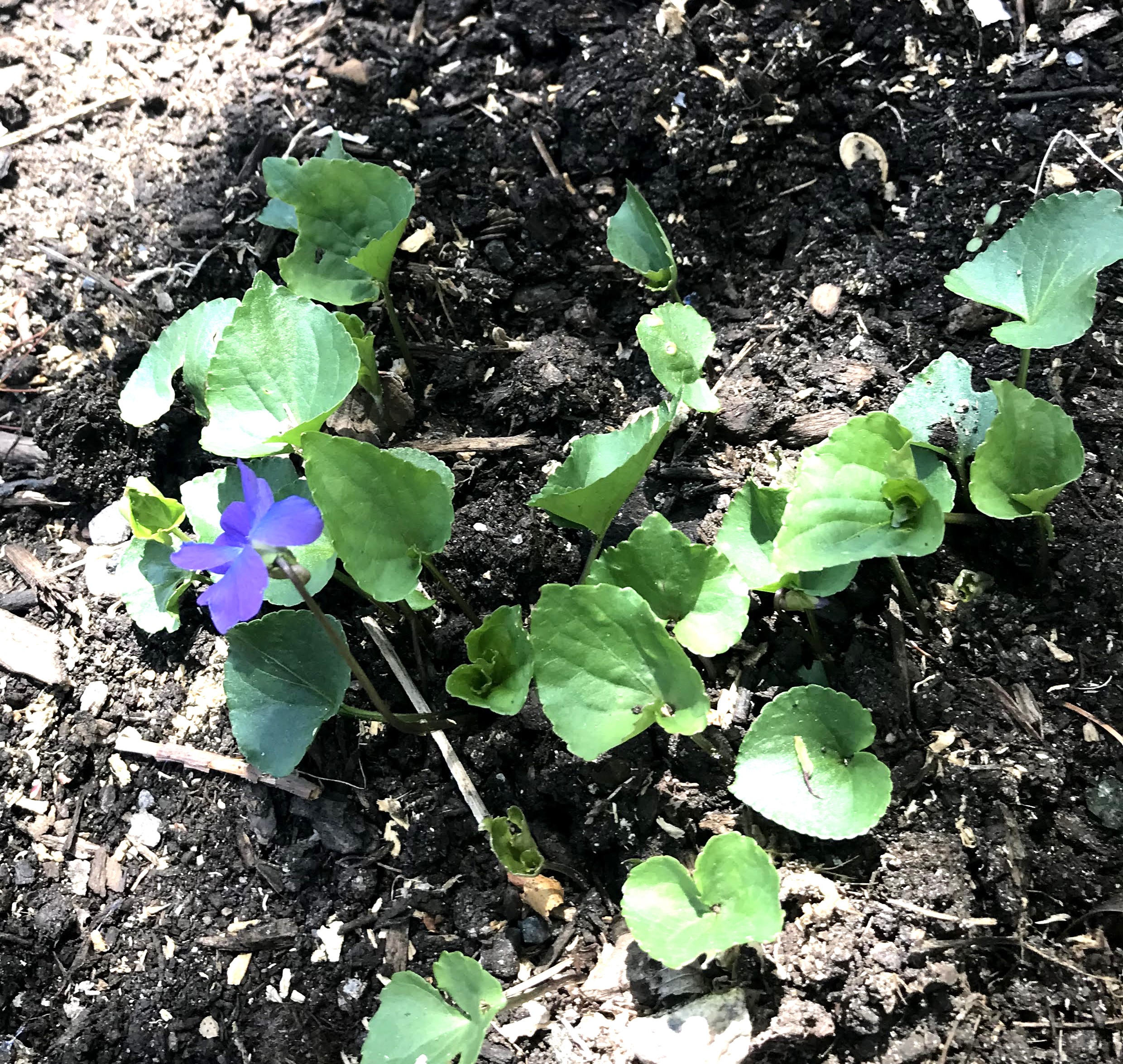
I love seeing these small purple flowers come spring. Most varieties of violets or viola come from Europe and Asia but the blue common violet hails from the Americas. The flowers and leaves are edible and can often be seen in fancy salads but can also be cooked or blended into a smoothie.
My youngest daughter Nia is an herbalist and makes the most beautiful medicines with the violets she picks from her sister Morgan’s yard each year. I use violets mainly in respiratory blends as an expectorant to ease the symptoms of bronchitis, asthma, sore throat and cough. Violets contain vitamins A & C, flavonoids, antioxidants, and saponins among many other constituents. Violet tea and, one of my favorites, violet syrup can help with most respiratory issues.
Violets can also be used topically for skin conditions. Its cool, moist energies and anti inflammatory actions can help heal skin conditions such as eczema, acne, and various skin infections. The salicylic acid compounds in violets can also help with arthritis and sore muscles, used in a poultice, violet can reduce pain and swelling.
All photos were taken by me in my own yard.
Aquene, Cher
 Cheryll Toney Holley