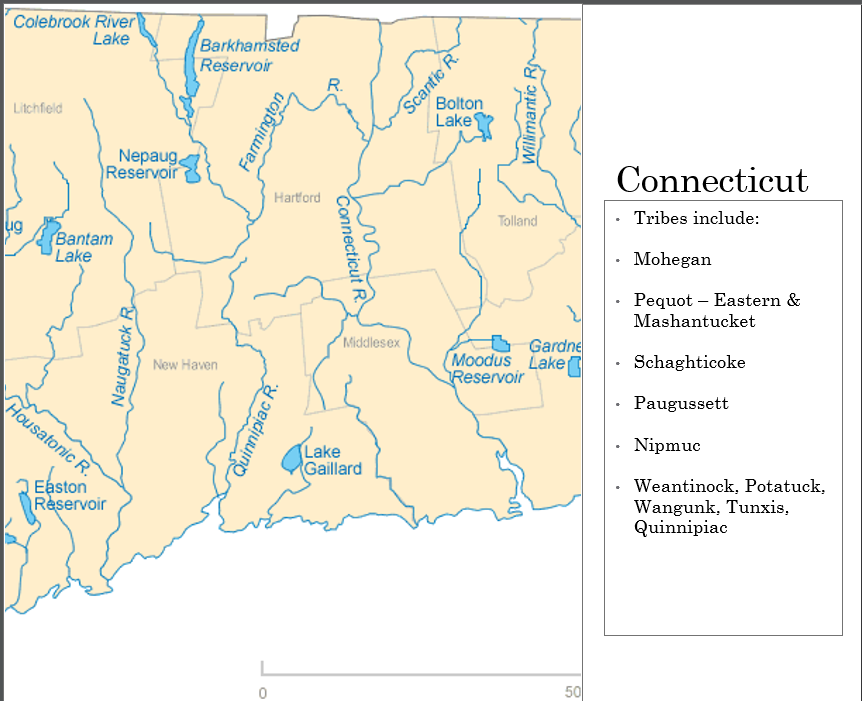
The Mohegan Story: Alliance, Adaptation, and Endurance
The Mohegan people, whose history is deeply rooted in the lands of what is now Connecticut, were originally part of the larger Pequot tribe. But in the early 1600s, under the leadership of Uncas, the Mohegan emerged as a distinct tribal nation.
Uncas made a strategic and often controversial decision: he chose to align the Mohegan with the English colonists during a time of intense conflict and upheaval. This alliance, though complex, helped the Mohegan navigate the turbulent colonial period. The tribe continued to side with the English in subsequent wars, including the Pequot War and King Philip’s War.
During this era, Mohegan leadership also embraced Christianity, incorporating it into tribal life while maintaining their cultural identity. This spiritual and cultural adaptation was part of a broader effort to ensure survival in a rapidly changing world.
In the 18th century, a group of Mohegans joined with other Christianized Indigenous peoples under the guidance of Samson Occom, a Mohegan minister and visionary leader. Together, they formed the Brothertown Indian community in what is now upstate New York—an effort to create a self-sustaining Native Christian settlement.
Throughout these centuries, the Mohegan Tribe remained under the so-called “protection” of the English Crown, a relationship that both shielded and constrained their sovereignty. Despite this, the Mohegan people never ceased to govern themselves and maintain their unique identity.
Their story is one of strategic alliance, cultural resilience, and enduring sovereignty—a testament to their determination to survive and thrive in the face of colonization.
The Pequot Tribes: Resistance, Survival, and Renewal
The story of the Pequot people—both Western (Mashantucket) and Eastern Pequot—is one of strength, sovereignty, and resilience in the face of profound loss.
Unlike some neighboring tribes, the Pequots were not known for aligning with the English colonists. As a large, powerful, and centralized nation, they fiercely defended their homelands and independence.
This resistance led to one of the most brutal conflicts of the colonial era: the Pequot War (1636–1638). The war culminated in a devastating massacre at Mystic, where hundreds of Pequot men, women, and children were killed. In the aftermath, the tribe was nearly decimated, and survivors were enslaved, exiled, or placed under the control of colonial governments.
For generations, the Pequots lived under the oversight of colonial-appointed guardians, who imposed restrictions on their land, governance, and autonomy. Despite this, the Pequot identity persisted.
Some Pequot individuals eventually joined the Brothertown Indian community, a coalition of Christianized Native people formed in upstate New York under the leadership of Samson Occom, a Mohegan minister.
Today, both the Mashantucket Pequot and Eastern Pequot Tribal Nations continue to uphold their heritage, reclaim their stories, and assert their presence in the lands they have called home for centuries.
Their legacy is a powerful reminder of what it means to endure, adapt, and rise again.
Western Connecticut’s Indigenous Nations: A Story of Unity and Continuity
In the Housatonic Valley of western Connecticut, the Schaghticoke Tribal Nation represents a powerful legacy of intertribal unity. Formed from multiple Indigenous groups, today’s Schaghticoke people trace their ancestry to several western Connecticut tribes and bands—including the Oweantinock, Pequot, Pootatuck, and Tunxis—who came together to survive the pressures of colonization.
Similarly rooted in western Connecticut, the Golden Hill Paugussett Tribe is a continuation of the Paugussett, Pequonnock, Pootatuck, and Weantinock peoples. These historic communities maintained close cultural and familial ties and united over time to preserve their collective identity and traditions.
Together, these tribes reflect the resilience and adaptability of Native peoples in the region—upholding their sovereignty and heritage through centuries of challenge and change.
Aquene, Cher
 Cheryll Toney Holley