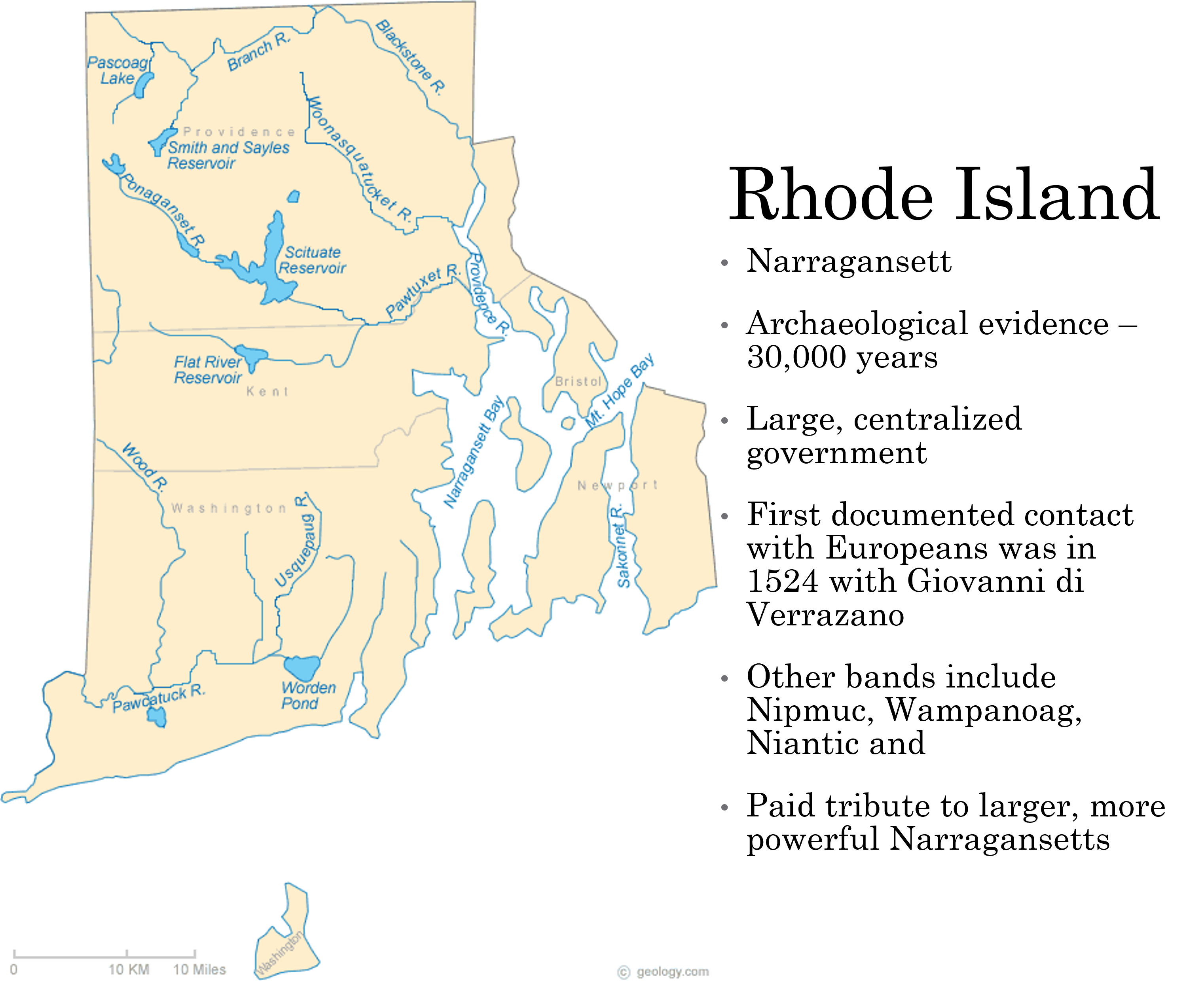
The history of the Narragansett Tribe is one of endurance, resistance, and the ongoing fight for sovereignty on their own homelands.
In 1635, Roger Williams arrived in what is now Rhode Island and established a settlement on Narragansett territory—land that had long been inhabited and stewarded by the Narragansett people.
During King Philip’s War in 1675, the Narragansetts allied with Metacom (also known as King Philip) in defense of Indigenous land and life. This decision came at a high cost. That winter, the tribe suffered a devastating blow during the Great Swamp Massacre, when colonial forces attacked their winter camp, killing hundreds of Narragansett men, women, and children.
Despite the immense loss, the Narragansett people continued to persevere. But in 1792, the Rhode Island legislature intervened in tribal governance, replacing the traditional leadership of the sachem with a state-appointed council.
Between 1880 and 1884, the state of Rhode Island initiated a process of detribalization, stripping the Narragansetts of their formal recognition and taking control of approximately 15,000 acres of their remaining land.
From 1884 to 1975, the Narragansett Tribe relentlessly worked to reclaim their rights and land. They filed a lawsuit to regain 3,200 acres of ancestral territory—and while they did not recover the full amount, they successfully received 1,800 acres through a land settlement agreement.
In 1978, the tribe filed a formal petition for federal recognition—a process that demanded extensive documentation and proof of their continuous existence and governance. After years of advocacy and persistence, the Narragansett Tribe achieved federal recognition in 1983.
This timeline reflects only a portion of the tribe’s story. It is a testament to the strength, resilience, and unbroken connection the Narragansett people have to their land, culture, and sovereignty.
Aquene, Cher
 Cheryll Toney Holley